Nieh confirmed for the NRC

November 19, 2025, 3:00PMNuclear News

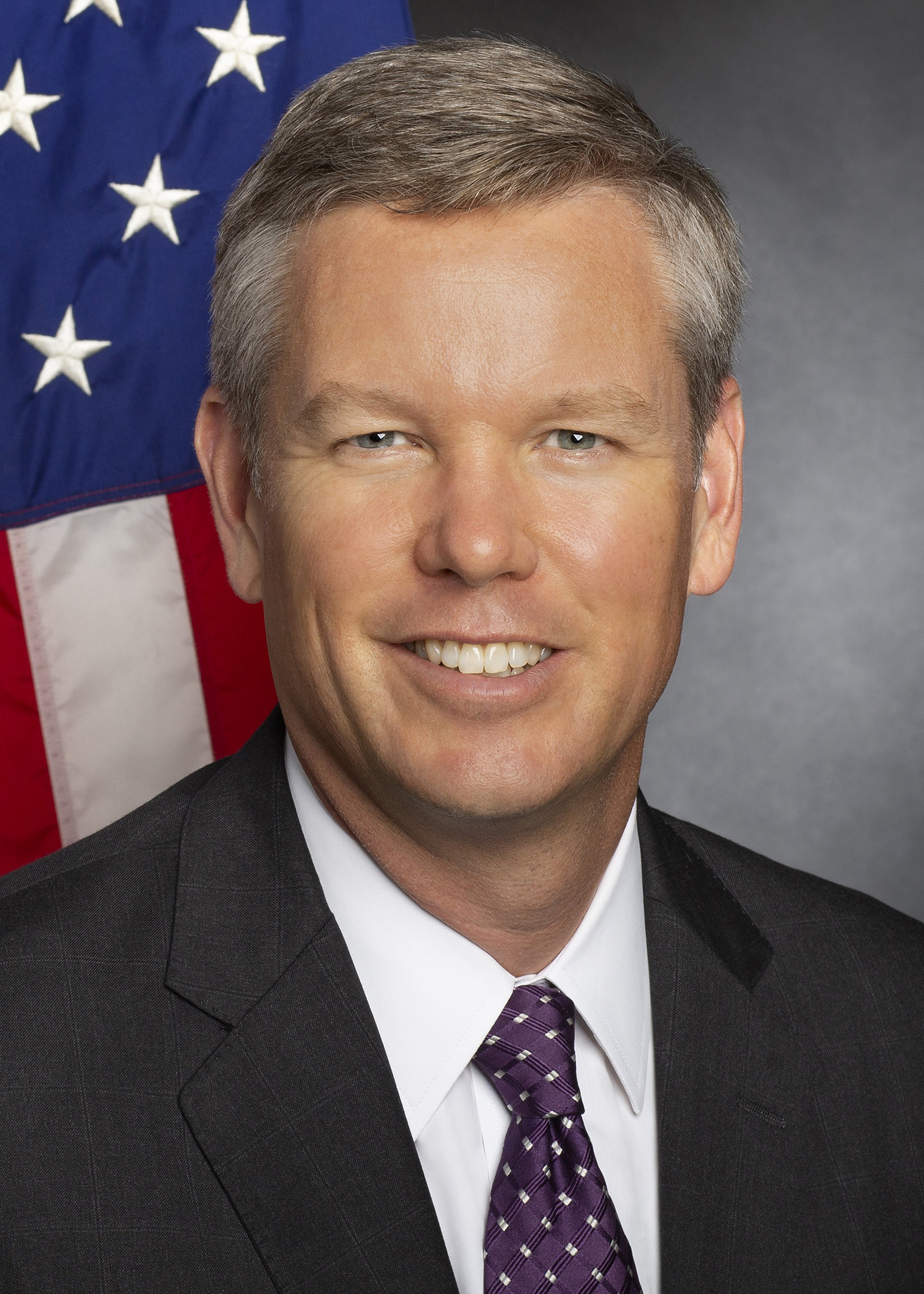
Nieh

Earlier today, the U.S. Senate officially confirmed Ho Nieh in a 66–32 vote to serve as a commissioner on the U.S. Nuclear Regulatory Commission through the remainder of a term that will expire June 30, 2029. All present Republicans, alongside 15 Democrats and one Independent, cast their votes in favor of Nieh, who was nominated by President Trump in July and fills the seat left vacant following the dismissal of former commissioner Christopher Hanson.

NRC details: The commission leading the NRC now comprises four members. Nieh joins Chair David Wright and commissioners Bradley Crowell and Matthew Marzano. One spot remains unfilled after the resignation of Annie Caputo in July. President Trump nominated Douglas Weaver earlier this month to fill Caputo’s seat.

A trip abroad

November 17, 2025, 7:01AMNuclear NewsHash Hashemian

Hash Hashemian president@ans.org

In my August column in Nuclear News, I reflected on the importance of ANS’s annual conferences for bringing together our nuclear community at the national level. In September, after speaking at Tennessee’s Nuclear Opportunities Workshop, I focused my NN column that month on the value of state-level conferences.

Also in September, alongside ANS Executive Director/CEO Craig Piercy, I shifted my focus to another key front in nuclear collaboration, the international stage, by attending the General Conference of the International Atomic Energy Agency in Vienna.

The timing of the IAEA’s General Conference could not have been better; it took place the same week the U.S. and U.K. kicked off a new wave of transatlantic partnerships in the nuclear sector between both government and industry. This fortuitous overlapping gave us a timely and concrete reminder of international collaboration’s unparalleled benefits.

The General Conference was an expectedly busy event. To cover as much ground as possible, Piercy and I took turns attending either the U.S. delegation meetings with other countries or the General Assembly of the IAEA, where the American Nuclear Society has a seat among other critical nongovernmental organizations.

We listened to presentations by several of the 180 IAEA member states, including, of course, the United States. Aside from ANS, the U.S. presence at the conference included U.S. Secretary of Energy Chris Wright, NRC Chair David Wright, and DOE Assistant Secretary of Nuclear Energy Ted Garrish.

U.S. representation was further bolstered by an industry delegation that included 65 participants from 32 companies, many of whom used the opportunity to report progress on their plans for the international expansion of their nuclear fleets. Meetings of that industry delegation were coordinated by the Nuclear Energy Institute.

Aside from the main conference, Piercy and I also attended the embedded meetings of the International Nuclear Society Council. INSC exists to facilitate knowledge-sharing and collaboration between 18 different member nuclear societies from around the world.

The INSC meetings within the General Conference brought together the presidents and senior members of those societies to give presentations and explore new opportunities. I made a presentation on the state of nuclear in North America, covering the latest developments and deployments in the U.S. and Canada.

This presentation emphasized the new nuclear lift in the U.S. that is being heavily supported by the Trump administration. I recapped the four executive orders issued by President Trump in May, the recent momentum at the DOE, and how these changes are capitalizing on a broader groundswell in both industry development and public support.

I also pointed out the success of our neighbor Canada in progressing on the first water-cooled small modular reactor in North America using BWRX-300 technology, which was supplied by an American firm and international partners—a perfect symbol of the value of global nuclear collaboration.

In all, I have now represented ANS at the state, national, and international levels, gaining useful insight into the work that needs to be done at each. From this vantage point, it’s clear to me that the path forward from the country to the globe is to, above all else, keep working together and supporting each other to bring about the next age of nuclear.


Senate EPW Committee to hold Nieh nomination hearing

October 7, 2025, 3:00PMNuclear News

Nieh

The Senate Environment and Public Works Committee will hold a nomination hearing Wednesday for Ho Nieh, President Donald Trump’s nominee to serve as a commissioner at the Nuclear Regulatory Commission.

Trump nominated Nieh on July 30 to serve as NRC commissioner the remainder of a term that will expire June 30, 2029, as Nuclear NewsWire previously reported.

Nieh has been vice president of regulatory affairs at Southern Nuclear since 2021, though since June 2024 he has been at the Institute of Nuclear Power Operations as a loaned executive.

A return to the NRC: If confirmed by the Senate, Nieh would be returning to the NRC after three previous stints totaling nearly 20 years.

Amentum plans to add 3,000 U.K. nuclear jobs, receives WM contract

September 22, 2025, 7:02AMRadwaste Solutions
Amentum says nuclear growth in the U.K. will result in the hiring of 3,000 new workers over the next four. (Photo: Amentum)

Global engineering company Amentum announced plans on Thursday to create 3,000 new jobs over the next four years on the back of growth in nuclear power and defense in the United Kingdom.

The announcement follows President Donald Trump’s state visit to the U.K., during which a number of deals between the two countries were announced.

Trump expels all but one member of nuclear waste oversight board

July 23, 2025, 9:31AMRadwaste Solutions

The Trump administration has dismissed seven of the (formerly) eight board members of the Nuclear Waste Technical Review Board, the independent federal agency tasked with evaluating the technical and scientific validity of Department of Energy activities related to managing and disposing of high-level radioactive waste and spent nuclear fuel.

Moving past Sayre’s Law on low-dose radiation

July 9, 2025, 12:02PMNuclear NewsCraig Piercy

Craig Piercy
cpiercy@ans.org

So, President Trump has just kicked the low-dose radiation hornets’ nest.

Specifically, his recently signed executive order “Ordering the Reform of the Nuclear Regulatory Commission” calls for the NRC to “reconsider reliance” on the linear no-threshold (LNT) theory and the ALARA (as low as reasonably achievable) standard for radiation protection.

This directive will certainly reignite a vociferous debate within the radiation research community over the continued efficacy of using LNT as the basis for protecting the public and the environment, a community that has been wracked with controversy on this matter for the last few years.

I must admit that whenever the low-dose issue comes up, my first thoughts always go to Sayre’s Law.

Health physicists respond to EO

July 2, 2025, 9:31AMANS Nuclear Cafe

Dewji

Bahadori

Caffrey

Three authorities on health physics have written a response to President Trump’s Executive Order 14300, “Ordering the Reform of the Nuclear Regulatory Commission.”

Published June 27 on Substack, “Radiation Protection Policy in a Nuclear Era: Recommendations from Health Physicists in Response to EO 14300” was written by Emily A. Caffrey, assistant professor and director of the Health Physics Program at the University of Alabama–Birmingham; Amir A. Bahadori, associate professor at Kansas State University; and Shaheen A. Dewji, assistant professor at the Georgia Institute of Technology.

Take steps on SNF and HLW disposal

June 20, 2025, 3:08PMNuclear NewsMatt Bowen

Matt Bowen

With a new administration and Congress, it is time once again to ponder what will happen—if anything—on U.S. spent nuclear fuel and high-level waste management policy over the next few years. One element of the forthcoming discussion seems clear: The executive and legislative branches are eager to talk about recycling commercial SNF. Whatever the merits of doing so, it does not obviate the need for one or more facilities for disposal of remaining long-lived radionuclides. For that reason, making progress on U.S. disposal capabilities remains urgent, lest the associated radionuclide inventories simply be left for future generations to deal with.

In March, Rick Perry, who was secretary of energy during President Trump’s first administration, observed that during his tenure at the Department of Energy it became clear to him that any plan to move SNF “required some practical consent of the receiving state and local community.”1

DOE opens pilot program to authorize test reactors outside national labs

June 20, 2025, 9:35AMNuclear News

Details of the plan to test new reactor concepts under the Department of Energy’s authority but outside national laboratory boundaries—first outlined in one of the four executive orders on nuclear energy released on May 23—were just released in a request for applications issued by the DOE.

Trump administration begins overhaul of the NRC

June 17, 2025, 7:42AMNuclear News

Hanson

Since the president's inauguration in January, the Trump administration has been on course to make big changes at the Nuclear Regulatory Commission to realize its goals of deregulation, energy dominance, and deployment of advanced reactors. Given the executive orders (EOs) and the work that the Department of Government Efficiency has done in cutting the federal workforce, it was a surprise that NRC commissioner Christopher Hanson was dismissed on Friday, according to a statement Hanson posted on his LinkedIn profile early Monday.

Hanson said in the post that President Trump terminated his position “without cause, contrary to existing law and long-standing precedent regarding removal of independent agency appointments.”

NRC approves NuScale uprated SMR design

June 2, 2025, 9:30AMNuclear News

NuScale earned approval for its “larger” US460 77-MWe small modular reactor plant design, the Nuclear Regulatory Commission announced last week.

The standard design approval (SDA) is a determination by NRC staff that a reactor design meets the agency’s applicable design requirements, and companies can reference it when applying for a license to build and operate the reactor—but it does not ensure license approval from the commission.

Trump issues executive orders to overhaul nuclear industry

May 23, 2025, 2:23PMUpdated May 27, 2025, 6:40AMNuclear News

The Trump administration issued four executive orders on Friday aimed at boosting domestic nuclear deployment ahead of significant growth in projected energy demand in the coming decades. These orders aim to reclaim leadership in nuclear technology crucial for national security and competitive AI advancements.

U.S. advances microreactor program for military sites

April 14, 2025, 9:30AMNuclear News

The Defense Innovation Unit announced April 10 next steps in the Advanced Nuclear Power for Installations (ANPI) program, launched in 2024 to deploy microreactor nuclear systems for increased power reliability at select military locations.

“Life is a roller coaster. It’s best ridden with your hands in the air.”

March 14, 2025, 9:31AMNuclear NewsCraig Piercy

Craig Piercy
cpiercy@ans.org

I find myself saying the expression above a lot these days—to my kids, my wife, my friends, and colleagues. Most recently, I said it to the person sitting next to me after the pilot of our plane—bound for Reagan National Airport a day after the collision of AA flight 5342 and a military Blackhawk helicopter—aborted the landing at the last minute.

I am not sure where I picked up this pronouncement, but I find it to be apropos to the topsy-­turvy moment where we find ourselves in 2025. In addition to the first U.S. commercial airline crash in 15 years, we are witnessing a new presidential administration in its infancy playing by the Silicon Valley rules of “move fast, break things.” We’ve seen DeepSeek, the low-cost Chinese AI that reportedly uses 50–75 percent less energy than its NVIDIA-powered counterparts, tank Constellation’s market value by more than 20 percent in one late-January trading day.